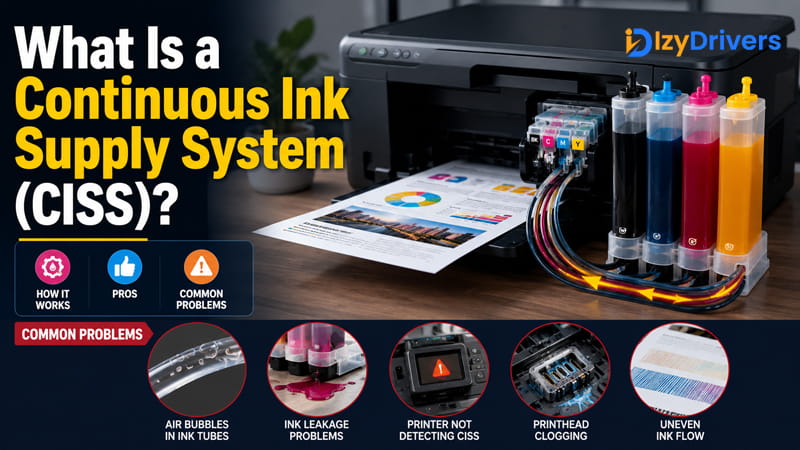
Continuous Ink Supply System setups have become increasingly popular among users who want to reduce printing costs without replacing their existing printers. For people who print regularly at home, in offices, schools, photo studios, or small businesses, standard ink cartridges often become expensive over time. This problem becomes even more noticeable in high-volume printing environments where printers are used daily for documents, reports, labels, or images.
Many users eventually start looking for a cheap printing solution that can lower operating costs while still delivering consistent print quality. One option that continues to stand out is the Continuous Ink Supply System, a printing setup that uses external ink tanks connected to the printer through tubes for continuous ink delivery. Instead of replacing small cartridges repeatedly, users can refill larger ink reservoirs and continue printing with fewer interruptions.
Even though the technology has existed for years, many people still misunderstand how it works. Some assume a modern ink tank printer and a Continuous Ink Supply System are exactly the same thing, even though their designs and maintenance requirements are different. Others recognize the term CISS but are unfamiliar with the actual mechanism behind the system or the reasons many businesses still use it today.
According to KEYENCE, continuous ink technology is designed to maintain uninterrupted ink flow for high-volume printing environments where efficiency and reduced downtime are essential. That principle remains one of the biggest reasons why these systems continue to be widely used despite the growing popularity of built-in ink tank printers.
What Is a Continuous Ink Supply System?
A Continuous Ink Supply System is a printing setup designed to provide ink continuously from external reservoirs instead of relying entirely on disposable cartridges. The system is commonly installed on inkjet printers to reduce printing costs and minimize the need for constant cartridge replacement. Because the printer receives a steady ink supply, users can print larger volumes without stopping frequently to refill or replace cartridges.
In simple terms, a Continuous Ink Supply System moves ink from refillable containers outside the printer into the printhead through a connected tube system. This design makes it different from traditional cartridge printing, where the cartridge itself stores only a limited amount of ink.
Many users choose this type of setup because standard cartridges can become expensive over time. For people who print documents daily, produce school materials, manage office paperwork, or run small print shops, a refillable ink system can dramatically lower operating costs. It also reduces waste because users refill the tanks instead of throwing away empty cartridges repeatedly.
What Does CISS Stand For?
CISS stands for Continuous Ink Supply System. The term is widely used in the printing industry to describe an external ink tank printer modification that supplies ink continuously while the printer operates.
The idea behind CISS is simple: instead of depending on small cartridges with limited capacity, the printer uses larger external tanks connected by tubes. These tanks act as a printer ink reservoir that stores more ink and feeds it directly into the printer when needed.
A Continuous Ink Supply System (CISS) is an external ink delivery setup that continuously feeds ink from refillable reservoirs to a printer without relying on standard disposable cartridges.
Because of this design, many people also refer to it as a bulk ink system. The concept focuses on reducing interruptions and improving efficiency for users who print frequently.
Why Was the Continuous Ink Supply System Created?
The Continuous Ink Supply System became popular because traditional cartridges were expensive and inefficient for large printing workloads. Early inkjet printers were designed mainly for occasional use, but printing demands increased rapidly in homes, schools, offices, and businesses.
As users began printing more pages, cartridge replacement became both costly and inconvenient. This led to the development of external tank solutions that could hold larger amounts of ink. Instead of replacing cartridges constantly, users could simply refill the tanks when necessary.
Another reason for the growth of the Continuous Ink Supply System was the demand for high-volume printing at lower operating costs. Small businesses and photo printing services needed a more economical way to produce documents and images without investing in expensive industrial printers.
Even today, many people continue using this setup because it offers flexibility, lower printing expenses, and easier long-term ink management.
How Does a Continuous Ink Supply System Work?
A Continuous Ink Supply System works by transferring ink from external reservoirs into the printer through connected tubes. Unlike standard cartridges that contain a limited ink supply, this setup allows ink to move continuously while printing is in progress. The system is designed to maintain stable ink delivery so the printer can operate for longer periods without interruption.
The entire process depends on several connected components working together correctly. When one part fails, users may experience an ink flow issue, inconsistent colors, or printing interruptions.
Main Components of a CISS Setup
External Ink Tanks
The external ink tanks are the main storage containers for the system. These tanks hold much larger amounts of ink than standard cartridges, making them useful for frequent printing. Because they are transparent in many setups, users can easily monitor ink levels and refill them before they become empty.
Ink Tubes
Ink tubes connect the external tanks to the printer cartridges or cartridge adapters. These flexible tubes are responsible for moving ink continuously into the printer during operation. The ink tube system printer design must remain free from air bubbles or blockages to maintain stable printing performance.
Modified Cartridge Units
Most setups use modified cartridge units or cartridge adapters that fit into the printer like standard cartridges. These adapters receive ink from the external tanks and direct it toward the printhead.
Printhead Connection
The printhead sprays microscopic droplets of ink onto paper during printing. In a Continuous Ink Supply System, the printhead receives ink continuously instead of drawing from a small internal cartridge chamber.
| CISS Component | Function |
|---|---|
| External Ink Tank | Stores large amounts of ink |
| Ink Tubes | Transfers ink continuously |
| Cartridge Adapter | Connects system to printer |
| Printhead | Sprays ink onto paper |
How Ink Flows From the Tank to the Printer
The ink feeding system relies on gravity, pressure balance, and controlled airflow to move ink properly. When the printer starts printing, ink moves through the tubes into the cartridge adapters and finally reaches the printhead.
The process may appear simple, but stable ink movement is extremely important. If the tubes contain trapped air or the tanks are positioned incorrectly, the ink delivery system printer setup can become unstable.
Many printing problems associated with CISS are actually related to interrupted ink flow rather than hardware failure.
Why Air Pressure Matters in CISS Systems
Proper printer ink pressure is essential for maintaining consistent printing quality. The external tanks must usually remain at the correct height relative to the printer. If the tanks are placed too high, ink may leak into the printer. If they are too low, the system may struggle to deliver enough ink during printing.
Balanced airflow also prevents vacuum problems inside the tanks. When pressure becomes unstable, users may notice fading colors, missing lines, or inconsistent printing output.
Because of this, maintaining proper pressure and uninterrupted ink movement is one of the most important parts of using a Continuous Ink Supply System successfully.
Advantages of Using a Continuous Ink Supply System
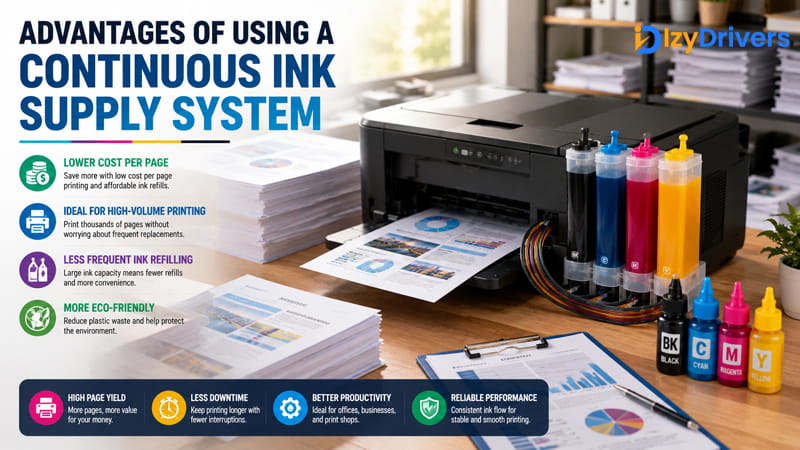
One of the biggest reasons people install a Continuous Ink Supply System is to reduce long-term printing expenses. Standard cartridges may seem convenient at first, but users who print frequently often realize how quickly replacement costs add up. A Continuous Ink Supply System helps solve this issue by allowing printers to use larger external ink reservoirs that can be refilled repeatedly instead of replaced after every depletion.
For many users, especially offices and print shops, this setup becomes a practical cheap printing solution that supports daily workloads without constant interruptions. It also provides more flexibility because users can choose compatible ink bottles rather than relying entirely on expensive original cartridges.
Based on a recent market report, demand for Continuous Ink Supply System setups continues to grow as businesses and home users look for lower printing costs and higher page yields. This trend reflects how strongly the market continues shifting toward more economical printing methods.
Lower Cost Per Page
A major advantage of using a Continuous Ink Supply System is the ability to achieve low cost per page printing. Traditional cartridges usually contain limited ink capacity, which means users may need replacements after printing only a moderate number of pages. Over time, those recurring purchases can become expensive.
With a continuous ink tank setup, users refill large external reservoirs using bottled ink. The cost of bottled ink is generally much lower compared to buying new cartridges repeatedly. Because of this, the price difference becomes especially noticeable for users who print documents every day.
Schools, offices, copy centers, and small businesses often benefit the most from this setup because even a small reduction in printing costs can produce significant savings over months or years of use.
Ideal for High-Volume Printing
Another reason many people prefer a Continuous Ink Supply System is its ability to handle high-volume printing more efficiently. Instead of stopping regularly to replace cartridges, users can continue printing for longer periods because the external tanks hold much larger amounts of ink.
This advantage is particularly useful in environments where printers operate continuously throughout the day. Offices printing reports, shops producing invoices, and businesses handling customer paperwork all benefit from fewer interruptions and more consistent workflow.
The larger ink supply also helps reduce downtime. In many cases, users only need occasional refills instead of replacing cartridges several times per week. For busy workplaces, that convenience alone can improve productivity considerably.
Compared to traditional cartridges, a printer ink tank system also makes it easier to monitor remaining ink levels. Since many tanks are transparent, users can quickly see when a refill is needed before printing stops unexpectedly.
Less Frequent Ink Refilling
Although the system still requires maintenance, users generally refill ink far less often than they replace cartridges in standard printers. This makes daily printing more convenient, especially for people managing large workloads.
A properly installed Continuous Ink Supply System can usually print thousands of pages before requiring significant refilling. For users who regularly print documents, presentations, labels, or graphics, this reduces interruptions and simplifies printer management.
The convenience of a refillable setup is one reason why CISS remains popular even after modern factory-built ink tank printers entered the market. Many users still prefer upgrading an existing printer rather than purchasing an entirely new device.
More Eco-Friendly Than Disposable Cartridges
Disposable cartridges create a considerable amount of plastic waste over time. Frequent cartridge replacement means more plastic components, packaging materials, and discarded parts eventually end up in landfills.
A Continuous Ink Supply System reduces this waste because users refill the same tanks repeatedly instead of throwing away empty cartridges. While the system itself still uses plastic components, the overall amount of discarded material is generally lower compared to standard cartridge printing.
For users trying to reduce operating costs while also minimizing waste, this can be an additional advantage beyond simple financial savings.
Common Problems With a Continuous Ink Supply System
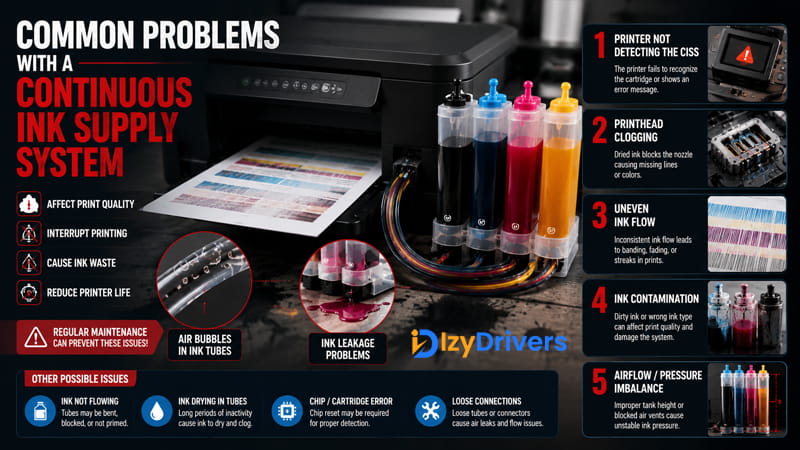
Although a Continuous Ink Supply System offers lower printing costs and higher efficiency, it also comes with maintenance challenges that some users underestimate. Most problems are not caused by the printer itself but by installation mistakes, poor maintenance habits, or unstable ink flow conditions.
Understanding these issues is important because even small problems can affect print quality or damage printing performance over time.
Air Bubbles Inside Ink Tubes
One of the most common issues in a Continuous Ink Supply System is an air bubble in ink tube pathways. When air enters the tubes, the printer may struggle to receive a stable ink supply.
This can lead to faded colors, missing lines, or inconsistent printing results. Air bubbles usually appear because of improper installation, loose tube connections, or empty ink tanks.
In many cases, users can solve this problem by re-priming the tubes and restoring proper ink flow.
Ink Leakage Problems
An ink leakage problem can occur when the external tanks are positioned incorrectly or when pressure inside the system becomes unstable. If the tanks sit too high relative to the printer, gravity may force excess ink into the printhead.
Leaks can also happen if the tubing becomes damaged or disconnected. Besides creating messes, leaking ink may eventually affect internal printer components.
Keeping the tanks level with the printer and checking tube connections regularly can help reduce leakage risks.
Printer Not Detecting the CISS
Some printers may occasionally experience detection errors after installation. In these situations, the printer not detecting CISS components is often related to chip recognition problems rather than ink flow failure.
Modern printers sometimes use cartridge authentication systems that may not immediately recognize modified cartridges or adapters. Resetting the cartridge chip or reinstalling the cartridge unit often solves the problem.
| Common Problem | Possible Cause | Basic Solution |
|---|---|---|
| Air bubbles | Poor ink flow | Re-prime ink tubes |
| Ink leakage | Incorrect tank position | Adjust tank height |
| Clogged printhead | Dried ink | Run cleaning cycle |
| Detection issue | Chip error | Reset cartridge chip |
Printhead Clogging
Printhead clogging is another issue commonly associated with infrequent printer use. When ink sits inside the printhead for long periods, dried residue may block the tiny nozzles responsible for spraying ink onto paper.
This type of ink clogging can reduce print quality or completely interrupt printing in severe cases.
Running regular cleaning cycles and printing periodically can help prevent dried ink buildup inside the printer.
Uneven Ink Flow
Stable ink movement is essential for proper printing performance. If the system experiences inconsistent pressure or partial blockages, users may notice uneven colors or interrupted printing patterns.
Many continuous ink troubleshooting situations are connected to unstable tube pressure, trapped air, or incorrect tank placement. Maintaining balanced airflow and proper tank positioning helps keep ink moving consistently.
Can CISS Damage a Printer?
A properly installed Continuous Ink Supply System usually does not damage a printer directly. However, poor installation, leaking ink, or neglected maintenance can create problems over time.
Most serious issues happen when users ignore maintenance requirements or install incompatible components. Using high-quality ink, monitoring tube conditions, and maintaining stable pressure are all important for long-term reliability.
When installed correctly and maintained properly, many users operate CISS setups for years without major hardware problems.
Continuous Ink Supply System vs Ink Tank Printers
The comparison between a Continuous Ink Supply System and modern ink tank printers has become more common in recent years as manufacturers continue promoting refillable printing technology. At first glance, both systems appear similar because they rely on refillable ink rather than disposable cartridges. However, there are several important differences in design, maintenance, reliability, and long-term convenience.
A Continuous Ink Supply System is usually an aftermarket modification added to a standard inkjet printer. In contrast, ink tank printers are factory-designed with built-in reservoirs already integrated into the printer body. Brands such as Epson with Epson EcoTank and Canon with Canon MegaTank developed their systems specifically to provide lower printing costs without requiring external modifications.
Key Differences Between CISS and Ink Tank Printers
The biggest difference is the overall structure. A traditional Continuous Ink Supply System uses external tanks connected to the printer through visible tubes. Ink tank printers, meanwhile, store ink inside integrated compartments designed directly by the manufacturer.
Another important difference is installation. A CISS setup often requires manual installation, cartridge modification, and tube routing. This process can be difficult for inexperienced users. Ink tank printers eliminate that complexity because the refillable system is already part of the printer.
Maintenance is also different. A Continuous Ink Supply System generally requires more attention because external tubes, pressure balance, and airflow conditions must remain stable. Ink tank printers are usually easier to manage because manufacturers optimize the internal ink delivery system during production.
| Feature | CISS | Ink Tank Printer |
|---|---|---|
| Ink Storage | External tanks | Built-in tanks |
| Installation | Manual setup | Factory-installed |
| Maintenance | Higher | Lower |
| Cost | Usually cheaper upfront | Higher initial price |
The discussion around CISS vs cartridge printing is another reason these systems became popular. Before refillable printers entered the mainstream market, many users installed external tank systems simply to avoid buying expensive replacement cartridges repeatedly.
Interestingly, modern ink tank printers are inspired by the same low-cost printing concept that made Continuous Ink Supply System setups popular years earlier. Many newer refillable printers essentially refine the same idea into a cleaner and more stable factory-built design.
Which Option Is Better for Long-Term Use?
The answer depends largely on printing habits, budget, and maintenance expectations. A Continuous Ink Supply System may be the better option for users who already own a compatible printer and want a lower-cost upgrade without buying a new machine. It can also remain practical for high-volume users who are comfortable handling basic maintenance tasks.
Ink tank printers are usually better suited for people who want a cleaner experience with less manual adjustment. Since the tanks are integrated directly into the printer, there are fewer exposed tubes and fewer pressure-related problems.
When comparing CISS vs ink tank printer setups, reliability often favors factory-built models because manufacturers design every component to work together from the beginning. However, properly installed aftermarket systems can still perform well for years if users maintain them carefully.
In many cases, the decision comes down to convenience versus upfront cost. External tank modifications are often cheaper initially, while factory-built refillable printers usually provide a more polished long-term experience.
Maintenance Tips for a Continuous Ink Supply System
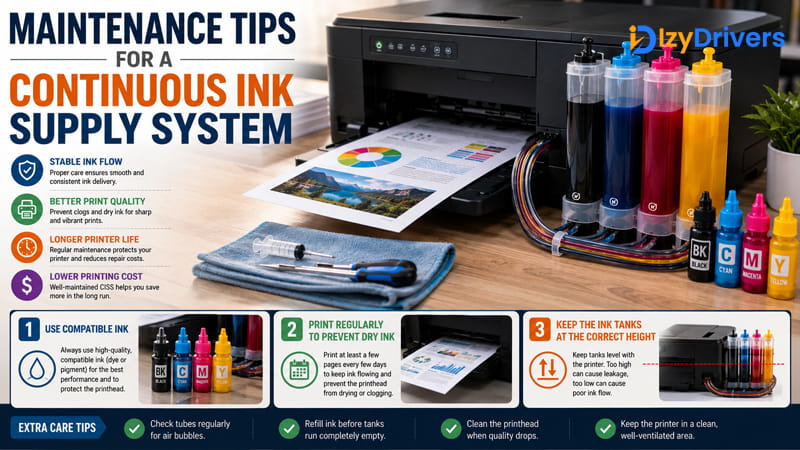
A Continuous Ink Supply System can operate reliably for years, but only if users follow proper maintenance routines. Many common printing problems are caused by neglect rather than hardware failure. Stable ink flow, proper airflow, and clean printheads all play an important role in maintaining print quality.
Following basic CISS maintenance tips can help reduce clogging, leakage, and inconsistent printing results.
Use Compatible Ink
Always use ink designed for your specific printer model and printing needs. Some printers work better with dye ink, while others are optimized for pigment ink. Using the wrong ink type may affect color accuracy, print durability, or printhead performance.
Low-quality ink can also create sediment buildup inside the tubes or printhead over time. This may eventually lead to clogging and unstable printing.
Before refilling the tanks, check whether your printer is designed for dye-based or pigment-based formulations.
Print Regularly to Prevent Dry Ink
One of the simplest ways to protect a Continuous Ink Supply System is to print regularly. Inkjet printers are not designed to sit unused for long periods. When ink remains idle inside the printhead, it can dry and block the nozzles.
Printing a few pages every few days helps maintain the ink circulation system and reduces the risk of dried ink buildup. Even a simple color test page can help keep the printer operating normally.
Regular use is especially important in warm environments where ink evaporates faster.
Keep the Ink Tanks at the Correct Height
Tank positioning affects pressure balance inside the system. If the external tanks sit too high, excess pressure may push ink into the printer and cause leaks. If the tanks are too low, the printer may struggle to pull ink properly.
For best results:
- Keep the tanks level with the printer body
- Avoid bending or pinching the ink tubes
- Check airflow vents regularly
- Refill tanks before they become completely empty
- Clean the printhead periodically if print quality decreases
These small maintenance habits can significantly improve the long-term reliability of a Continuous Ink Supply System.
Conclusion
A Continuous Ink Supply System remains one of the most practical ways to reduce printing costs for users who print frequently. By using external refillable tanks instead of disposable cartridges, the system allows continuous ink delivery while lowering long-term operating expenses.
Although a Continuous Ink Supply System offers major advantages for high-volume printing, it also requires regular maintenance and proper installation. Airflow balance, printhead care, and stable tank positioning all affect printing performance over time.
For users who want the lowest possible printing costs and do not mind occasional maintenance, these systems can still provide excellent value. Businesses, schools, offices, and print shops often benefit the most because they consume large amounts of ink regularly.
Modern refillable printers have become more popular in recent years, but CISS setups continue to remain relevant because they offer flexibility and lower upgrade costs for existing printers.
Although modern ink tank printers are becoming more common, the Continuous Ink Supply System remains a practical solution for users who prioritize low printing costs and flexible ink refilling.
FAQS About Continuous Ink Supply Systems
Is a Continuous Ink Supply System Worth It?
Yes, a Continuous Ink Supply System can be worth it for users who print frequently and want lower operating costs. It is especially useful for offices, schools, and businesses that require high page volumes regularly.
Can Any Printer Use CISS?
No, not every printer is compatible with CISS setups. Some printers support aftermarket systems more easily, while others use cartridge authentication or designs that make installation difficult.
Does CISS Damage Printers?
A properly installed Continuous Ink Supply System usually does not damage printers directly. Most problems happen because of poor installation, unstable pressure, or neglected maintenance.
Why Is My CISS Leaking Ink?
Leaks often happen because the tanks are positioned incorrectly or the tubes contain pressure imbalance. Damaged tubing and loose connections can also cause leaking problems.
How Long Does CISS Ink Last?
Ink duration depends on printing volume and tank size. In many cases, CISS reservoirs can support thousands of pages before requiring refilling.